欢迎来到 [中博国际展览官网]
, 进入
2027宁波国际文具展
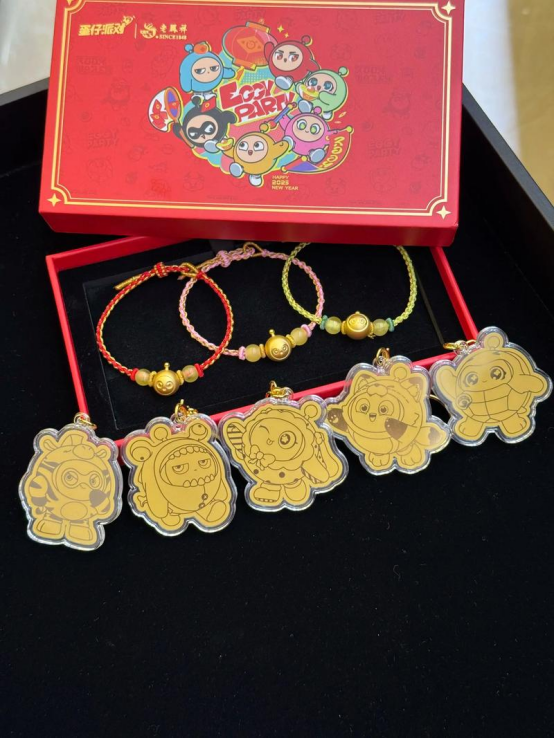
In recent years, brand collaborations have become a common strategy in the consumer market. From Luckin Coffee partnering with Kweichow Moutai to launch the Sauce Aroma Latte, to Lao Feng Xiang Jewelry collaborating across sectors with the mobile game Eggy Party, the co-branding economy has continued to heat up. Research data shows that in 2023, the market size of China’s co-branding economy exceeded one trillion yuan, and it is expected to grow to 3 trillion yuan by 2025. Through cross-industry integration between brands and IPs, the co-branding economy leverages scarcity and personalization to meet young consumers’ pursuit of emotional resonance and identity recognition, becoming a new driving force for consumption upgrading. However, behind this prosperity, issues such as excessive consumption and resource waste are gradually emerging. In particular, the phenomenon of teenagers blindly chasing co-branded giveaways reflects underlying concerns about the urgent need for regulation in the co-branding economy.
The rapid development of the co-branding economy benefits from its precise grasp of consumer psychology. The consumption philosophy of the younger generation has shifted from functional satisfaction to emotional connection. Co-branded products provide carriers for personalized expression through storytelling and cultural connotations. Successful collaborations can achieve a “1 + 1 > 2” effect, enhancing brand influence while meeting consumers’ emotional needs.
However, the booming co-branding economy also hides many problems. On the one hand, aggressive marketing strategies by businesses fuel irrational consumption. To obtain co-branded merchandise, consumers are often required to meet high purchase thresholds, such as buying multiple drinks or set meals to receive gifts, or being lured by “hunger marketing” that creates a sense of scarcity. While this model may boost sales in the short term, it easily causes consumption behavior to deviate from its essence. The phenomenon of middle school students buying ten hamburgers just to collect toys and discarding most of the food is a vivid example of such distortion. On the other hand, overly frequent co-branding campaigns may lead to aesthetic fatigue among consumers. Data shows that in early January 2025 alone, more than 70 co-branding campaigns were launched simultaneously, with some leading brands even introducing new collaborations weekly. An oversaturated market ultimately weakens the unique value of co-branding.
Teenagers have become the main force in co-branded consumption, with social motivations playing a particularly prominent role. Co-branded products are regarded as “social currency,” and owning scarce merchandise symbolizes recognition and a sense of belonging among peers. One junior high school student admitted that purchasing co-branded products was not driven by genuine fondness for the IP, but because “everyone else has it, and without it, there’s nothing to talk about.” This comparison-driven mentality turns consumption from a means of meeting needs into a tool for gaining identity recognition. However, teenagers have yet to form mature financial values and often struggle to distinguish between “needs” and “wants,” making them susceptible to marketing tactics. More alarmingly, excessive consumption directly leads to food waste, which not only violates the virtue of frugality but also exposes value deviations within the co-branding economy.
In addition, the long-term development of the co-branding economy faces challenges in cultural integration and quality control. Some brands, in their pursuit of traffic and attention, neglect product substance, causing collaborations to degenerate into short-lived marketing gimmicks. Data indicates that over 60% of consumers prefer designer or IP co-branded products, yet only a small portion of collaborations truly generate sustained purchase intention. This shows that for the co-branding economy to grow sustainably, it must shift from a “traffic-driven mindset” to a “value-driven mindset,” placing greater emphasis on product quality and cultural depth.
To guide the co-branding economy back onto a healthy path, coordinated efforts from multiple parties are required. Businesses should abandon excessive marketing strategies and explore sustainable cooperation models. For example, peripheral products could be sold separately or exchanged through point systems to reduce forced bundled consumption. Co-branding designs should also emphasize cultural substance rather than simple logo placement. Cultural and museum collaborations that integrate historical elements with practical functions can avoid homogenization while enhancing long-term value. Parents and schools should strengthen education on consumption values through pocket money management and social practice activities, helping teenagers develop rational consumption awareness. In addition, regulatory authorities can establish standards for marketing practices that induce waste, promoting industry self-discipline.
The essence of the co-branding economy should be a win-win of creativity and culture, rather than a short-term traffic carnival. Only when co-branding shifts from chasing symbols back to creating real value can it become a sustainable source of vitality for the consumer market, rather than a burden on social resources.
Declaration: This article comes from the China Economic Herald. If copyright issues are involved, please contact us to delete.

 17
17