Welcome to 中博国际展览官网! , Entry China Ningbo Interantional Stationery Fair 2027
Home > Headline > Industry trends
Cultural and Creative Products: Striving to Become Must-Buy City Souvenirs
According to China Consumer News, the recently issued Implementation Opinions on Promoting the Expansion and Upgrade of Commodity Consumption proposes supporting local authorities to develop "must-buy and must-bring" city gifts. Antique-style bookmarks, portable aromatherapy diffusers, landscape folding fans, city-limited canvas bags... A host of delicate cultural and creative products have evolved from mere embellishments for cultural tourism into an effective channel to boost local consumption and spread culture. It deserves attention and consideration from all stakeholders on how to turn these products into premium must-buy and must-bring items.In recent years, a growing number of intangible cultural heritage goods and urban trendy products have gained popularity, compared with conventional fridge magnets and keychains printed with iconic city buildings. Nevertheless, many tourist-oriented cultural and creative products boast attractive appearances yet lack distinct cultural connotations. Some merchants fail to dig deep into local history and folk customs. Instead, they blindly apply templates and mass-produce identical goods, turning cultural and creative products into homogenized assembly-line wares.Cultural and creative souvenirs that only focus on superficial design cannot win over consumers or achieve sustainable development. To avoid the phenomenon of identical products across different destinations, merchants need to strengthen their original design capacity, improve product quality and optimize the industrial ecosystem.Merchants should move beyond superficial development and explore unique local cultural heritage. The charm of cultural and creative products lies not in fancy exteriors, but in distinctive cultural cores. Popular hit cultural and creative products win wide popularity not by copying trends, but by translating exclusive local cultural memories into premium goods that combine modern aesthetics and practical functions. Only by fully telling regional stories, refining product quality, and endowing each cultural and creative piece with origin, warmth and emotional resonance can these products take root in consumers' hearts. For example, Guangxi has launched intangible cultural heritage Zhuang brocade merchandise themed on the "March 3rd" Festival, while Nanjing developed lantern trendy products combined with the night tour of Qinhuai Lantern Fair, both leaving deep impressions on visitors.Distinctive features alone are not enough; the industrial ecosystem also needs further improvement. At present, museum resources, intangible cultural heritage craftsmanship, creative R&D and market operation operate in isolation in many regions, making it difficult for high-quality local cultural resources to achieve integrated development. Local authorities should remove bottlenecks, build platforms for cross-sector collaboration, focus on characteristic local industrial sectors, develop differentiated brands, shore up weak links across the industrial chain, and help city-themed tourist cultural and creative products gain greater fame and broader market access.Tourist cultural and creative products should break out of traditional sales venues such as scenic spot stalls and museums. For a long time, these products have suffered from limited sales channels, weak communication effects and a narrow consumer reach. On the premise of reliable product quality, more premium cultural and creative products should step out of cultural tourism-specific scenarios and enter urban commercial districts and leisure blocks. Besides, digital technologies and new media platforms can be leveraged to upgrade static cultural and creative products into immersive cultural services, enabling tourists to take home a souvenir as well as exclusive memories of the city.Though small in size, tourist cultural and creative products connect to vast consumption potential. By exploring local features, streamlining industrial chains and expanding application scenarios, regions can blaze an innovative path for city gifts and achieve a win-win outcome for cultural value and economic benefits.Source: China Consumer NewsDeclaration: Some texts and images in this article are sourced from enterprises and online platforms. lf copyright issues are involved please contact us to delete.
antway
24 days ago
398
Booming Green Stationery Demand in Back-to-School Season: Industry Sees Quality Divide
The September back-to-school season drives a concentrated release of consumption for school supplies. Categories including stationery, schoolbags, eye-care lamps and printing consumables are ushering in another sales peak. Unlike previous years when competition focused solely on price, parents and students now pay greater attention to eco-friendly materials, safety standards, practical design and durability. Back-to-school purchasing has shifted from one-off bulk procurement to meticulous quality-focused selection.Shifts in consumer demand are forcing a reshuffle of the industrial chain. Traditional stationery enterprises still rely on channel and price advantages to serve the mass market. Meanwhile, enterprises with strengths in eco-friendly materials, original design and campus scenario-oriented R&D gain easier access to mid-to-high-end shelf space and e-commerce recommendation slots. According to Tianyancha statistics, China has more than 3.08 million active stationery-related enterprises. Around 216,000 new enterprises were registered in 2025, and over 130,000 new registrations have been recorded since 2026, demonstrating robust vitality on the supply side behind the back-to-school consumption boom.Two development paths have emerged within the industrial chain. Some manufacturers continue to meet mass demand through large-scale production and extensive distribution. Others focus on segmented functions for campus scenarios to enhance design, materials and brand recognition. Although back-to-school orders arrive in a concentrated window, an enterprise’s long-term competitiveness hinges on its ability to convert this seasonal one-time traffic into stable year-round repeat purchases.Feedback from sales channels reveals a notable consumption trait: steady sales of basic products alongside growing demand for functional goods. Standard pens, notebooks and rulers remain staple items. Products such as ergonomic schoolbags, low-odor glue, eco-friendly book covers, refillable pen cartridges and desk organizers attract more attention from parents. Consumption upgrading does not mean higher prices equal better quality. Instead, purchasing decisions are jointly determined by safety, durability, convenience and aesthetics.Regionally, Guangdong, Zhejiang, Jiangsu and other regions with solid manufacturing and foreign trade foundations remain major hubs for stationery and school supply enterprises. These regions boast strong production and processing capacity, as well as access to e-commerce channels and campus retail networks, allowing them to respond rapidly to surging back-to-school orders.The back-to-school season benefits not only end-product brands. Sectors including paper products, eco-plastics, printing and packaging, campus retail and instant delivery all see order growth. At the same time, small and medium merchants selling low-cost, inferior products with non-compliant labels and unstable supply capacity will face stricter regulation and greater return-and-exchange pressure. Although school supplies feature small-ticket and frequent purchases, this sector links manufacturing, distribution, campus services and household consumption. The trend toward higher quality will keep reshaping profit distribution across the industry.Source: Huidu FinanceDeclaration: Some texts and images in this article are sourced from enterprises and online platforms. lf copyright issues are involved please contact us to delete.
antway
24 days ago Industry trends
525
Upgraded Traditional Stationery: From "It Works" to "Work Smarter"
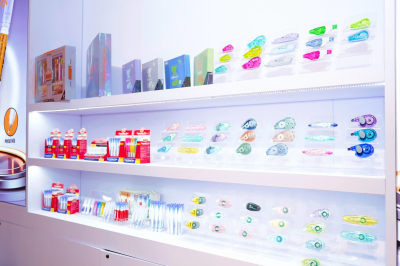
Recently, a report by China Consumer Daily revealed quiet changes taking‑place on stationery shelves for the 2026 back‑to‑school season. On August 23, reporters visited a chain stationery store at Bairong World Trade Center in Dongcheng District, Beijing. In a junior‑high‑school student’s shopping basket, alongside traditional pens and notebooks, lay a hollow geometric template ruler and a dual‑end quick‑correction pen for writing and erasing mistakes — a more innovative selection of goods compared with last year.In a patent interpretation article on cultural, educational and office supplies released in June, the China Culture, Education & Sports Goods Association stated that traditional stationery items are seeing continuous improvements in convenience, durability and comfort through structural innovation, material upgrading and multi‑function integration. The traditional stationery sector maintains strong momentum for technological innovation.The Evolution of a Straight RuleOnce, a basic ruler, an eraser and a gel pen were enough for most office‑work and hand‑drawing scenarios. Today, however, the range of rulers on stationery shelves has become remarkably diverse.At the drawing‑tool section of the stationery store in Bairong World Trade Center, plain traditional straight rulers occupy only a small shelf space. They have given way to a wide array of specialized auxiliary rulers with targeted functions, drawing crowds of students and parents. In the past, students finished all assignments and sketches with a single ordinary ruler, relying entirely on experience to calibrate angles and draw shapes.“It was common for the sides of a square not to meet or end up crooked,” recalled a junior‑high‑school student from Fengtai District, Beijing. Repeated corrections wasted time and spoiled the neatness of exercise books.Today this pain point has been well addressed. Shelves are stocked with geometric template rulers for primary‑ and secondary‑school coursework, hollow lace rulers for journal‑making, special rulers for postgraduate‑exam answer sheets, and curved‑line auxiliary rulers, covering diverse needs.Template rulers are plastic boards pre‑cut with shapes. Students can trace along the edges to draw geometric figures, guide lines, stars, cartoon patterns and more. “These special geometric template rulers help draw standard shapes instantly. They boost note‑taking efficiency and allow students to sketch diagrams quickly for geometry exercises,” one student shopper commented. Data from an e‑commerce platform shows that multi‑functional template rulers have become top‑selling items in many online stationery shops over the past week.Behind the Boom of Specialized‑Function RulersWhy have these specially‑shaped, function‑specific rulers appeared widely on retail shelves?The answer lies in manufacturing. Traditional manufacturing followed the logic of “large‑batch, low‑variety” production. Mould costs could only be recovered after producing hundreds of thousands of units, so few factories would develop moulds for niche demands. This trend has now shifted. In the stationery industry, the “small‑batch, fast‑response” production model has moved from concept to reality. Data from the 1688 wholesale platform indicates stationery products tagged “customisable in small lots” have an average minimum order quantity of only 50 sets, with delivery cycles shortened to within seven days. Factories can therefore rapidly accept orders, create new moulds and deliver goods for various new styles and shapes.The Next‑level Gel PenFine‑tuned innovation in stationery extends well beyond rulers. At multiple stationery outlets inside Bairong World Trade Center, correction products with paper‑toned correction tapes and error‑transfer adhesive tapes occupy prime shelf positions. Field tests show conventional white correction tapes leave pale marks inconsistent with notebook paper, while paper‑toned correction tapes blend seamlessly with page backgrounds. Though a minor detail, this feature meets students’ growing demand for neat‑looking work.“I prefer paper‑toned correction tape. White tape looks like patches all over my exercise book,” said a senior‑high‑school student from Chaoyang District, Beijing, noting that stationery buyers now attach great importance to user experience.According to the 2026‑2031 China Stationery Industry Research Report & Market Forecast released by China Report Hall, younger consumers represented by Generation Z have fundamentally shifted their demands for stationery. Instead of treating stationery purely as functional tools, they regard them as carriers for emotional expression and individuality, favouring uniquely‑designed products with cultural value.Quick‑correction pens have won wide popularity among shoppers. Featuring a dual‑end design, one tip is a 0.5 mm gel pen, while the other holds a replaceable 4‑metre correction tape. Users can switch instantly between writing and correction with a single flip, removing the trouble of hunting separately for pens and correction supplies while doing homework or taking notes.“It is cleverly designed. One pen serves both writing and error‑fixing, very handy for meetings.” “Extremely practical. The pen writes smoothly, the built‑in correction tape is convenient and lightweight enough for pencil cases, and the paper‑toned tape works wonderfully.” These are typical reviews left by buyers.Consumer demand for stationery that is both practical and fun is rising across the market. Yiwu market statistics show orders for multi‑functional stationery pens rose by 40 % year‑on‑year during the 2025 back‑to‑school season. Multi‑functional graphic rulers and quick‑correction pens perfectly match this market trend.A Market Trend Comes to FruitionRising sales of multi‑functional template rulers and quick‑correction pens are driven not only by improved product performance, but also deeper structural changes.Since the implementation of the “Double Reduction” policy, the average daily written‑homework time limit has been set at 60 minutes for Grades 3‑6 and 90 minutes for junior‑high students. In 2026, the Ministry of Education issued the Negative List for Basic‑Education Standard Management (2026 Edition), listing “assigning homework exceeding officially‑stipulated time limits” among its 20 prohibitions. Students now have extra time for reading, sports and rest. The stationery industry has spotted this underlying shift: as homework time is no longer unlimited, learning efficiency within fixed periods has become a new priority. Template‑ruler designs cut down repeated erasing and deliver smoother writing workflows, while dual‑end quick‑correction pens save time spent fetching separate supplies and help students stay focused.From the era when “one single ruler covered every task” to today’s diversified specialized rulers, and from single‑function gel pens to dual‑end quick‑correction pens, the stationery sector is undergoing demand‑driven, refined upgrading. As “precision and practicality” become widely‑valued consumer standards, competition in the stationery market has moved beyond simple price wars, shifting toward products that save buyers time and effort.Source: China Consumer DailyDedaration: Some texts and images in this article are sourced from enterprises and online platforms. lf copyright issues are involved please contact us to delete.
antway
24 days ago
435
Jiangsu Supports Micro and Small Enterprises of Intangible Cultural Heritage in Cultural and Creative Development
   When time-honored intangible cultural heritage craftsmanship faces new development hurdles such as capital shortages, insufficient design support and limited sales channels, what solutions are available? Recently, the Department of Culture and Tourism of Jiangsu Province, together with nine other authorities including the Department of Education, the Department of Industry and Information Technology and the Department of Finance, jointly issued the Measures for Supporting the Cultural and Creative Development of Micro and Small Enterprises Engaged in Intangible Cultural Heritage in Jiangsu Province (Trial). The document puts forward 16 targeted measures to address these challenges.    At present, Jiangsu has registered more than 110,000 micro and small enterprises (including individual businesses) related to intangible cultural heritage, nearly 80% of which operate cultural and creative businesses. The measures define eligible recipients as qualified small or micro intangible cultural heritage enterprises, with priority support for cultural and creative product development, brand operation and IP incubation. The province will conduct comprehensive surveys, dynamically update the enterprise directory, and select no fewer than 300 innovative enterprises for key cultivation.    To tackle bottlenecks in funding and workspace, concrete support has been rolled out. Enterprises that meet standards for annual R&D and launch of intangible cultural heritage cultural and creative products will receive subsidies. They may also apply for the Su Tourism Loan with interest discounts. Financial institutions will launch the Intangible Cultural Heritage Inheritance Loan and set up fast-track approval channels. In terms of venues, local authorities are encouraged to repurpose idle spaces for intangible cultural heritage workshops and exhibition halls with rent reductions as part of urban renewal. Public cultural and tourism spaces will be opened for immersive experiences and themed markets.    Traditional craftsmanship will be revitalized through design empowerment and technological assistance. Under the measures, no fewer than 100 design salons and special lectures will be held each year. At least 50 enterprises will be paired with designers to develop over 100 distinctive cultural and creative products and city souvenirs. The AI Partner Initiative will also be launched to help enterprises adopt AI for creative design and 3D modeling and improve sample production efficiency. Supported by the Jiangsu Museum Cultural and Creative Alliance, enterprises can further cooperate on IP licensing of museum collections, jointly develop national trend cultural and creative goods, VR/AR interactive experiences and digital collectibles, and connect online and offline sales channels. Furthermore, to integrate culture, commerce, sports and tourism, at least 100 enterprises will take part in cross-industry promotion and negotiation events annually. No fewer than 50 promising firms will be matched with leading industry players to launch co-branded products.    The measures also encourage core enterprise staff to apply for titles including representative inheritors of intangible cultural heritage, masters of arts and crafts and Jiangsu Craftsmen. Qualified practitioners may serve as industrial professors at vocational schools. Annual online and offline training will cover no fewer than 500 participants. For brand development, the Intangible Cultural Heritage Cultural and Creative Committee will be established under the Jiangsu Intangible Cultural Heritage Protection Association to provide brand diagnosis services for a minimum of 200 enterprises each year. Efforts on intellectual property protection will be strengthened, including consultation on registration, guidance for adopting data intellectual property rights and blockchain evidence preservation, as well as mechanisms for fast-track rights enforcement and public legal aid against infringements.Source: Guangming DailyDedaration: Some texts and images in this article are sourced from enterprises and online platforms. lf copyright issues are involved please contact us to delete.
antway
24 days ago
373
POP MART CRYBABY Beijing Special Exhibition Opens, Boosting Art Toy IP Economy
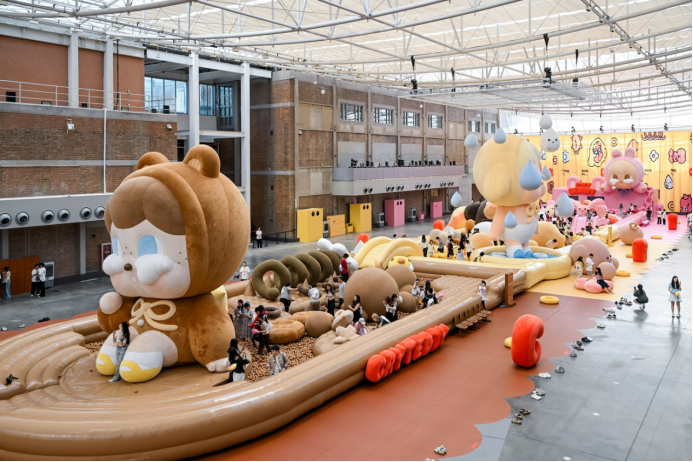
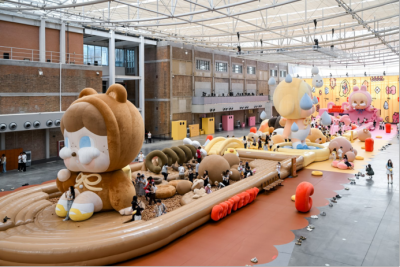
   Driving the Art Toy IP Economy, POP MART CRYBABY Special Exhibition Debuts in Beijing    This summer, major IP art toy brands have stepped up their efforts to boost IP appeal through special exhibitions, driving growth in the art toy IP economy.    From August 1 to September 5, 2026, the CRYBABY Tears & Courage Beijing Exhibition is held at Central Station, Shougang · Langyuan Station. Centered on the theme "Letting Go & Holding on", the show occupies an expansive venue of over 3,800 sqm as the world's largest CRYBABY exhibition, featuring the global debut of CRYBABY's "star friends". Following the Shanghai stop in early 2026, CRYBABY once again invites visitors on a tear-connected adventure of inner exploration between releasing emotions and embracing courage.Source: Beijing Release    In recent years, CRYBABY has broken free from the single label of "cuteness" with its distinctive "tear narrative", striking a chord with audiences worldwide across regional and cultural boundaries. Industry insiders note that this is more than an IP special exhibition; it is an emotional ritual shared by the artist, POP MART and fans. It allows feelings to be seen, named and embraced, elevating the IP from a trendy symbol to a vessel for emotional companionship and self-expression, and ultimately embodying long-term value for youth-oriented IPs.World's Largest CRYBABY Exhibition Lands in Beijing    The Beijing show carries forward highlights from the Shanghai exhibition earlier this year, reuniting three classic characters: Crybaby, Crybunny and Cryteddy. It subtly interprets the delicate balance between "letting go of pain" and "holding onto hope" in a soft, fluid artistic form. The exhibition guides visitors through an inner journey of falling, settling and rising again, inviting them to feel the weight of emotions, let tears flow freely, and witness strength and hope quietly regenerate and bloom.    A much-anticipated surprise awaits visitors: on weekends throughout the exhibition run, guests get the chance to meet CRYBABY's "star friends" up close, marking their global debut. Hugs and face-to-face interactions build a warmer, more direct emotional bridge between visitors and the IP, standing out as the brand-new highlight of this exhibition.Trendy IP as an Emotional Medium Connecting the Globe    Created by Thai artist Molly in 2017, CRYBABY is an emotional symbol rooted deep within all living things. Through this IP, the artist encourages people to face genuine feelings, release emotions bravely and move forward. Since its launch, CRYBABY has won massive popularity across the globe thanks to its unique tear-driven narrative, evolving into a blockbuster IP transcending cultures and borders.    Artist Molly commented: "I'm delighted to bring the world of CRYBABY to Beijing for the first time and embark on a unique inner journey together with everyone. Moving forward, I hope CRYBABY can accompany more people and serve as quiet yet firm spiritual support and inner strength."    In 2020, POP MART rolled out the first CRYBABY collectible figure, introducing the character to a broader consumer market. Since then, CRYBABY has continuously expanded its thematic content and product lines, ranging from figures to plush toys. The IP keeps pushing creative boundaries and strengthening emotional bonds with fans.Source: Beijing ReleaseDedaration: Some texts and images in this article are sourced from enterprises and online platforms. lf copyright issues are involved please contact us to delete.
antway
1 months ago
97
Two AI Projects Land in Longwan, Wenzhou, Filling Key Gaps in the Digital Cultural & Creative Industrial Chain
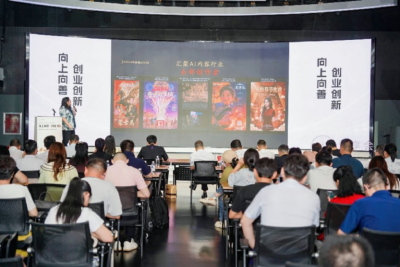
Recently, the signing ceremony for major projects of Wenzhou, Zhejiang Province in the second quarter of 2026 was held. During the special session featuring landmark projects of cultural "new trio", two artificial intelligence projects settled in Wenzhou International Cloud Software Valley in Longwan District, filling key gaps along the digital cultural and creative industrial chain.As a pivotal hub for Wenzhou’s digital industry, Longwan has steadily consolidated its AI computing infrastructure, fostered local cultural and creative market players, and built a full-spectrum industrial cluster covering the entire chain of content creation and distribution. The two newly inked projects focus on two niche tracks: AI-powered cultural products going global and open-source AI game development. They will drive the local application of artificial intelligence from initial rollout toward efficient, practical iteration and upgrading.Scene of the signing ceremony for landmark projects of Wenzhou’s cultural "new trio".Photo by Liu WeiThe China (Wenzhou) AI Creative Trade Port is designed to build an all-in-one AI creation platform that delivers AI-assisted creation across the whole workflow, including script generation, video production, multilingual dubbing and subtitle translation. Meanwhile, a digital content asset trading platform will be established to provide end-to-end services: rights confirmation, copyright protection, global distribution, compliance-enabled overseas expansion, and monetization via transactions.The project landing stems from Longwan’s solid foundation in the cultural and creative sector. Relying on the Southern Zhejiang Base for AI Content Creation and Communication, the district now hosts 9 enterprises above designated size engaged in the cultural "new trio", with total revenue reaching nearly 2 billion yuan. "An industrial chain spanning content production to overseas communication is rapidly taking shape in Longwan. The launch of the Creative Trade Port precisely plugs the critical link of global distribution and commercial monetization," an official from Longwan District noted.The second signed initiative is the Open-Source AI Game Creation & Digital Content Industry Platform. It plans to develop DSGO, an open-source collaborative platform for AI game development and content distribution. Supporting facilities encompass three centers: R&D for the DoraSSR open-source game engine, AI model and computing power scheduling, and digital game content production and operation. Two supporting systems will also be constructed: an ecosystem for developers and creators, alongside a framework for AI game content safety and copyright management. The project lead is a post-2000 entrepreneur from the OPC community, vividly demonstrating the district’s robust sci-tech ecosystem capable of nurturing and accommodating young innovation teams.The themed event for Wenzhou to build an AI & OPC innovation hub kicked off in Longwan District on July 25.(Photo provided by the Publicity Department of Longwan District Party Committee, Wenzhou)The simultaneous settlement of the two projects is no coincidence; it marks a phased achievement of Longwan’s ongoing efforts to cultivate a sound AI industrial ecosystem. The district has hosted multiple AI-themed events recently, attracting sci-tech talents and enterprises from home and abroad, with over 20 sci-tech entities having settled here in succession. Additionally, the district has rolled out the comprehensive industrial policy package AI Haven 18 Articles tailored for the AI sector, covering the full lifecycle of enterprises to continuously optimize the business environment for the digital cultural and creative industry.Computing power underpins the development of the digital cultural and creative industry. At present, Longwan is home to more than 3,000 digital economy enterprises. Industrial statistics show that from January to May 2026, revenue from the district’s core artificial intelligence industry hit 1.69 billion yuan, surging 48.1% year-on-year. The coordinated advancement of computing resources, industrial platforms and favorable policies keeps unlocking the growth potential of the digital cultural and creative sector.Dedaration: Some texts and images in this article are sourced from enterprises and online platforms. lf copyright issues are involved please contact us to delete.

antway
24 days ago
316
Summer Economy Heats Up, Igniting Consumer Vitality in the Stationery Market!
Summer Box Office Surpasses 6.1 Billion YuanNational Summer Culture & Tourism Consumption Season Issues Over 450 Million Yuan in SubsidiesInbound Foreign Visitors Reach 22.914 Million…In the summer of 2026, the seasonal economy is heating up,igniting consumer vitality across the entire stationery market!An Animated Film Sparks New Heat in Cultural & Creative Stationery ConsumptionThe summer movie season has always been an important window for cultural consumption, and this year, the fervour of the film market is extending upstream and downstream along the industry chain.On July 18, the domestic animated film The Eight Immortals! was released nationwide, with its advance screenings and pre‑sales box office exceeding 100 million yuan. It scored 9.7 on Maoyan’s early‑screening ratings and 8.3 on Douban. As of July 29, the total summer box office for 2026 had surpassed 6.1 billion yuan, exceeding the same period last year.(Image source: CCTV News)The Eight Immortals! adopts a clear strategy of "pre-release strategic planning" for licensed derivatives.Well before the film's official release, the fully licensed derivative cultural and creative products had already been rolled out across the market – covering four major categories: intangible cultural heritage (ICH), stationery, lifestyle goods, and trendy toys, with the R&D team planning over 200 SKUs. The project team adopted a cautious market‑testing strategy: the 200+ SKUs are primarily used for concept display and audience feedback collection, and based on real‑world responses, only a few dozen will be selected for full‑scale production. This model reflects the domestic film derivatives market's shift from "post-release derivative development" to "pre-release strategic planning".(Image: The Eight Immortals! Shu brocade cultural merchandise – Source: BAXIAN Cultural & Creative on Xiaohongshu)Meanwhile, The Eight Immortals! is deeply integrated with traditional intangible cultural heritage crafts. The R&D team moved beyond surface‑level pattern printing, embedding the characters' physical features and costume details deeply into product designs. Traditional crafts such as Shu brocade, Shu embroidery, intangible‑heritage tie‑dyeing, and woodblock New Year prints have been infused into this national‑style animation merchandise.Moreover, many cinemas in Chengdu, Sichuan have simultaneously created diverse scenes such as trendy toy derivatives and cultural‑creative markets. Theatres have introduced catering, baked desserts, coffee book bars, and other formats, creating "national‑trend movie cuisine," developing IP‑co‑branded merchandise, and extending the film's value chain. Some cinemas have also brought in XR immersive large‑scale spaces, allowing audiences to “step into” the movie scenes even after the show ends – bringing traditional culture into consumer scenarios in a more youthful way.From film IP to stationery products, cultural content is endowing traditional stationery with greater emotional value. What consumers are buying is not just a notebook or a set of stationery, but also an expression of identification with a work, a culture, and their personal interests.Integration of Culture, Sports, and Tourism Opens Up New Horizons for Stationery Consumption(Image source: Shaoxing Publicity)Beyond movies, study‑oriented tourism (educational travel) has continued to gain momentum since the start of summer. More and more families are incorporating cultural venues such as museums and art galleries into their travel plans.Museums across various regions have launched innovative measures. In Jiangsu Province, over 70 museums extended their opening hours during the summer, 19 introduced night‑tour brands, and 154 premium exhibitions and 362 study‑tour activities were rolled out in succession. Sales of cultural‑creative merchandise at some venues increased by 40%‑50% during the summer. Xuanwu District in Nanjing leveraged its museums as the core and consumption as the engine, fully launching graduation‑season cultural tourism consumption activities, with nearly 500 themed events organised across scenic spots, cultural venues, and commercial districts. Shaoxing City consolidated high‑quality cultural and tourism resources across the region, planning over 80 promotional events focused on study tours, museum experiences, night tours, performing arts, and more.(Image: A grand fish‑lantern parade performance at Shipu Ancient Town in Xiangshan.)At the same time, sports‑driven events are also bringing new growth space for cultural and creative consumption. As the whistle of the 2026 FIFA World Cup echoed across North American stadiums, global attention was fixed on the matches. Within the officially licensed merchandise system, a uniquely Chinese cultural narrative quietly unfolded: FIFA launched the “Intangible Heritage Meets the World Cup” special project for the Greater China region for the first time, bringing together multiple cross‑regional national‑level ICH crafts including Zhuang brocade, Ru kiln ceramics, Huzhou writing brushes, and Yangcheng Qiaoshi Fahua ceramics. Led by several ICH inheritors, these projects deeply integrated millennia‑old traditional craftsmanship with tournament elements to create officially co‑branded cultural products.(Image source: China Arts & Crafts Design and R&D Centre)From cultural venues and urban tourism to sporting events, the integration of culture, sports, and tourism is continuously expanding the boundaries of stationery consumption – transforming stationery from a mere study tool into a consumer product that carries cultural memories and emotional expression."China Travel" Opens New Opportunities for Stationery Going GlobalInbound consumption is becoming a major incremental segment of summer consumption in 2026.According to data from the National Immigration Administration, in the first half of 2026, inbound foreign visitors reached 22.914 million, a 20.4% year‑on‑year increase. Among them, visa‑free arrivals totalled 17.815 million, accounting for 77.7% of all inbound foreigners, up 30.6% year‑on‑year. Among the top 20 source countries and regions for inbound tourism this summer, European countries accounted for 30%, with orders growing by 275% year‑on‑year and ticket orders surging by more than 20 times."China Travel" continues to trend on global social media, and cultural‑experience consumption now accounts for over 50% of spending by inbound tourists. Foreign visitors are no longer satisfied with merely "checking in" – they are eager to immerse themselves in local life: stepping into workshops to make handicrafts alongside artisans, or browsing local markets and bargaining with vendors.(Image source: CCTV Finance)This inbound tourism boom is opening a new door for the stationery industry. From museum‑branded pencil cases and Chinese‑style journals, to ICH‑craft notebooks and city‑themed stationery sets, what inbound tourists take home is not just travel memories but also stationery products that carry Chinese culture – presenting unprecedented opportunities for cultural and creative stationery to go global.(Image source: Yicai)From animated‑film merchandise and the rising popularity of museum cultural products, to the "reverse cross‑border shopping" by inbound tourists – the three major consumption engines of the 2026 summer economy are opening brand‑new growth channels for the stationery industry.The functional attributes of traditional stationery are being redefined: a pen can be an "extra chapter" of a movie, a journal can be a "mobile exhibition hall" of a museum, and a stationery set can be an "emotional landmark" of a journey through China. As consumer demand shifts from "buying a product" to "experiencing culture and expressing emotions", the stationery industry is facing not just a simple product upgrade, but a transformative opportunity – moving from "manufacturing tools" to "creating content."Looking ahead, as consumer demand continues to evolve, we look forward to the stationery industry's ongoing exploration of design innovation, cultural integration, and scenario expansion, creating even more new consumption spaces on the foundation of its traditional strengths.Dedaration: Some texts and images in this article are sourced from enterprises and online platforms. lf copyright issues are involved please contact us to delete.
antway
2 months ago
281
Pudong AI Cultural and Creative Industry Base Opens, Pioneering a New Model of "IP + AI + Ecosystem"
According to CNR, the Artificial Intelligence Cultural and Creative Industry Base was officially inaugurated at Jinke Park in Pudong New Area recently. Jointly developed by Pudong New Area and China Literature Group, the first phase of the base spans approximately 15,000 square metres and is fully occupied at present. It is equipped with multiple industrial facilities and professional cultural spaces. This initiative represents a major step for Shanghai to implement the national "AI Plus" action plan, as well as a milestone for Pudong to fuel cultural creativity with AI and build a national benchmark "AI + Cultural Creativity" industrial project.Accelerating the Full AIGC Industrial ChainOn the inauguration day, the base unveiled a series of phased achievements and innovative initiatives covering content platforms, creative tools, talent training and industrial collaboration, demonstrating a well-defined full-chain ecological layout.On the content side, premium video platform Qidian Theatre made its official debut. Leveraging China Literature’s massive IP library and mature creator ecosystem, the platform focuses on two core areas: adapting online literature IPs for film and television and incubating original IPs. It covers mainstream genres including urban fiction, xianxia, sci-fi, suspense, romance and infinite stream stories. For film studios and independent creators, Qidian Theatre opens access to adaptation cooperation for more than 100,000 IPs. It also launches a three-tier incentive mechanism consisting of guaranteed payment, permanent revenue sharing and periodic rankings, delivering sustainable income for digital creative practitioners.On the tool side, the upgraded DramaBuddy was released simultaneously. This tool builds an end-to-end premium production system spanning idea conception, content creation and project management. Its Infinite Canvas function breaks the conventional linear workflow, allowing creators to start work at any stage such as scriptwriting, storyboarding and character design. Three modules — Panoramic Director Console, Storyboard and Motion Capture Reference — work together to enable virtual studio previsualisation, multi-camera arrangement and controllable visual effects, greatly boosting creation efficiency. The Global Asset Extraction function for project management supports intelligent matching of multiple versions of characters, scenes and props, effectively cutting rework and communication costs. Combined, these functions offer a complete workflow from concept to final production for large-scale, high-quality episodic series.(Inauguration of the Pudong AI Cultural and Creative Industry Base (Photo courtesy of the interviewee, distributed by CNR)Two-Way Synergy Between Talent Cultivation and Industry DevelopmentTalent underpins industrial upgrading. The base launched the "Yueying" Training Programme on site, adopting a "7+7+7" training model. Seven core courses covering scriptwriting, storyboarding, character performance and digital human training help learners master seven key capabilities. The programme aims to cultivate seven types of interdisciplinary professionals for the industry, including AIGC scriptwriters, storyboard artists, character designers, artists, prompt engineers, editors, producers and project managers. Supported by professional film companies within China Literature’s ecosystem that deliver film-grade training standards, the programme strives to bridge the gap between universities, vocational training and industry demands.Meanwhile, official plaques were awarded to top author studios and celebrity studios. Renowned China Literature writers including Huxiao De Bi, Xue Hong, Gu Xi and Gu Zhengren attended as representatives, together with Huang Xiaoming, actor and Vice Chairman of the Shanghai Film Association. Their participation bolsters the base’s core creative capacity and strengthens its capability as a source of original IP and content. Right after the ceremony, the first training and exchange session kicked off. Participants held in-depth discussions on industry trends, talent benchmarks and career development, earning enthusiastic feedback on site.The base houses the cultural exhibition space One Hundred Years of Painting · Shanghai Ten Thousand Frames, alongside industrial facilities including an AI comic drama workflow system, the interactive AI creation environment "Black Box", and real-time motion capture equipment. The first batch of signed tenants comprises cultural and tech enterprises such as Yihua Kaitian, Haoyi Xing, Liangwu Games and NewGen IP.Hou Xiaonan, CEO and President of China Literature Group, noted in his speech that going forward, China Literature will cooperate with Pudong New Area to build a full-chain agglomeration for AI cultural and creative industries with three core priorities: cultivating premium works and establishing an industrial system for high-quality AI-driven cultural creations; integrating industry, academia and research to realise two-way progress in talent training and industrial growth; and pursuing global outreach — not only telling engaging Chinese stories, but also sharing industrial solutions worldwide."The base is exploring an innovative integrated development model of ‘IP + AI + Ecosystem’. Rooted in Pudong’s favourable industrial environment, we are confident to create a ‘Shanghai model’ for the AI cultural and creative sector."Moving ahead, the base will fully leverage Pudong’s strengths in policy, venue resources and industrial ecosystem. Combined with China Literature’s abundant IP assets, full-stack AIGC technologies and seasoned operational experience, it will keep exploring the integrated development paradigm of "IP + AI + Ecosystem". The initiative will support Shanghai’s development into a hub for digital cultural creativity and AI innovation, delivering a replicable "Shanghai model" for the nationwide "AI + Cultural Creativity" industry.Declaration: Some content or images in this article are provided by enterprises or sourced from the China National Radio. If any content involves copyright or other intellectual property issues, please contact us for removal.
antway
24 days ago
340
Chinese Stationery Takes Global Markets by Storm with Scenario-Driven Innovation
he 139th Canton Fair dazzled global buyers with an impressive lineup of groundbreaking Chinese stationery: chip-equipped smart art frames, fully biodegradable writing instruments, voice-activated electric pencil sharpeners, and modular study desks tailored for diverse living spaces. Domestic manufacturers are redefining the stationery sector guided by four core values: meticulous craftsmanship, child-centred creativity, eco-conscious compassion and user-first thoughtful design, transforming ordinary stationery into culturally rich, innovative products that resonate with international audiences.Jiangsu Phoenix Art Materials drew heavy attention with its smart art frames embedded with tracking chips, enabling full authenticity verification for artworks and winning wide recognition among galleries and collectors. Company executives stated that sustained R&D and consistent product upgrades, paired with multi-channel global distribution, have kept its foreign trade exports steadily rising this year.Jiangsu Xingda Stationery’s KStick lineup blurs the line between stationery and toys, featuring glue building blocks, customizable 3D stickers and magnetic drawing boards. Catering to young consumers’ demand for mood-boosting leisure products, its fast-drying, washable glue and interactive painting kits blend creative learning with parent-child bonding, earning glowing reviews from overseas purchasers. Playful, kid-focused design has become its winning formula to capture youth audiences worldwide.M&G Stationery rolled out its Endangered Wetland Wildlife gel pen collection, decorated with vivid illustrations of rare birds that instantly caught overseas buyers’ eyes. The pen barrels are crafted from PLA biodegradable bioplastic, which fully decomposes under industrial composting conditions. This eco-conscious range was developed to raise global awareness of wildlife protection and biodiversity conservation. Backed by more than 1,200 patents and a portfolio of products awarded Germany’s iF Design Award, Red Dot and other top global industrial design honours, M&G secured new partnership opportunities with clients from Europe, Central Asia and South America during the fair.Ningbo Tianhong Stationery showcased ultra-quiet smart pencil sharpeners with interactive digital screens that display real-time operation status and automatic fault alerts. Its modular Bus-themed study set can be split and rearranged for bedrooms, living rooms and other spaces, complete with posture-correct saddle chairs, concealed storage compartments and AA-grade eye-protective lamps to build a dedicated all-in-one learning zone. The integrated study solution generated strong purchase interest among global trade visitors.By combining smart technology and deep consumer insight, Tianhong elevates stationery beyond basic functionality to deliver complete learning ecosystem solutions for children worldwide, fulfilling global demand for premium educational supplies with thoughtful, human-centred design.Declaration: Some content or images in this article are provided by enterprises or sourced from the internet. If any content involves copyright or other intellectual property issues, please contact us for removal.
antway
24 days ago Industry trends
223
Office Stationery Industry 2026: Invisible Stationery, Visible Future
Released on June 12, 2026, this article analyzes the booming office stationery sector boosted and Hanvon’s AI-powered M6 smart notebook. This underestimated trillion-yuan industry boasts full industrial chains and is transforming from cheap consumables to integrated office solution suppliers. Benefiting from the 15th Five-Year Plan, it enjoys policy support for green development, digital transformation and cross-border trade. Three major trends shape its development: deeper AI application creating smart office assistants, environmental practices becoming essential market thresholds, and IP and cultural creativity satisfying Generation Z’s pursuit of personalized products while facilitating stationery brands’ overseas expansion.
antway
24 days ago Industry trends
304
Home Page
Prev Page
1
2
Next Page
End Page