Welcome to 中博国际展览官网!
, Entry
China Ningbo International Stationery Fair 2026
In recent years, Chinese trendy toys have surged in popularity worldwide. In the first three quarters of 2025, China’s exports of festive goods, dolls, and animal-shaped toys exceeded RMB 50 billion, reaching more than 200 countries and regions. Many of these products belong to emerging domestic trendy brands.
Why are Chinese trendy toys gaining favor among overseas consumers? Reporters visited Guangdong, a major province for toy manufacturing and exports, and found that from Dongguan—the “Capital of Chinese Trendy Toys”—to Chenghai in Shantou—the “Capital of Chinese Toy Gifts”—China’s strong manufacturing capabilities, the creativity of foreign trade enterprises, the influence of traditional culture, and unwavering policy support have resonated in unison, propelling trendy toys onto the global stage.
Building IP
Walking into the showroom of Dongguan Kangda Toys & Gifts Co., Ltd., figures from Tom and Jerry and the Harry Potter series stand alongside Chinese trendy toys such as Pleasant Goat and the “Auspicious Dragon.” “It took us 20 years to move from ‘making brands for others’ to ‘creating our own culture,’” said Wen Guoxiong, Chairman of Kangda Toys. The company started out as an OEM manufacturer and has now successfully transformed into a branded enterprise with multiple proprietary trendy toy IPs.
In Kangda’s workshops, reporters saw laser cutting machines, computerized embroidery machines, and other advanced equipment neatly arranged, while hundreds of skilled workers rushed to complete products at their respective stations. In recent years, Kangda has obtained licenses from international IP owners such as Warner Bros., accumulating technological advantages through stringent OEM requirements for leading global brands. Building on this foundation, the company has developed a range of original trendy toy products. In 2024, the “Auspicious Dragon” trendy toy developed by Kangda accompanied the Shenzhou-18 mission into China’s space station. Its materials and craftsmanship passed aerospace-grade testing, showcasing the hard power of Chinese manufacturing in space. Through cooperation with cultural and tourism authorities, the company has also delivered zodiac-themed trendy toys to 176 countries and regions, supporting the global dissemination of Chinese culture through trendy toys.
It is understood that one quarter of the world’s animation-derived products are manufactured in Dongguan, and nearly 85% of China’s trendy toys are produced there. As one of the earliest regions to undertake the international transfer of the toy industry after China’s reform and opening-up, Dongguan has built a massive toy industry ecosystem, comprising over 4,000 manufacturing enterprises and nearly 1,500 supporting companies, making it the largest toy export base in China. In recent years, more and more enterprises have been unwilling to remain mere OEM producers and have embarked on an overseas expansion path driven by both contract manufacturing and independent branding. By the end of 2024, Dongguan had 160 above-scale enterprises involved in trendy toy production, giving rise to popular overseas brands such as Blokees (MoDongHe). In the first three quarters of 2025, Dongguan’s toy exports reached RMB 17.52 billion.
Another toy manufacturing hub opening international markets through a combination of strong manufacturing and originality is Chenghai, Shantou. At the 24th Shantou Chenghai International Toy & Gift Expo, buyers from the United States, the United Kingdom, Canada, and other countries gathered to source products, with intended contract values reaching RMB 15.8 billion. The spark generated by the integration of “Guochao” (China-chic) culture with the Chenghai toy industry cluster was particularly eye-catching.
In the first three quarters of 2025, Shantou’s toy exports to the European Union reached RMB 2.81 billion, up 11.4% year-on-year. Each day, Chenghai sees the launch of more than 1,000 new toy products, nearly half of which are related to Guochao IPs. Trendy figurines inspired by The Classic of Mountains and Seas, construction blocks featuring landmarks such as the Temple of Heaven, and trendy toys derived from traditional folk arts like Peking Opera and lion dances are frequent items on foreign buyers’ procurement lists. “European consumers are very interested in Chinese culture, and these types of toys are very popular in our market,” said Daniel, an Italian buyer.
“Chinese manufacturing remains irreplaceable,” overseas brand owners and buyers working with local trendy toy enterprises from Dongguan to Shantou unanimously remarked. “We have maintained long-term cooperation with factories in Dongguan, where nearly 80% of our blind-box products are produced. From design to manufacturing, the quality is excellent. We will continue to work with Dongguan’s trendy toy industry to expand global markets,” said Getruaning, Chief Marketing Officer of Berli Jucker International Holdings PCL of Thailand.
“International industry leaders still hold significant advantages in IP recognition and brand operation, but Chinese trendy toys are catching up rapidly,” said Xiao Senlin, Chairman of Guangdong HAYI Toys Co., Ltd., a key national cultural export enterprise. “We have clear advantages in supply chain efficiency, flexibility, and cost performance. From design and prototyping to mold manufacturing, mass production, and export logistics, almost the entire process can be completed within Dongguan. Younger generations of consumers are more receptive to diverse cultures, creating new opportunities for original Chinese designs to resonate globally.”
Policy Support
Since 2025, many trendy toy enterprises have clearly felt intensified competition in overseas markets. From building proprietary IPs to expanding abroad, every step of “going global” involves uncertainties and risks.
One major risk lies in the uncertainty of creating blockbuster IPs. “Trends are hard to predict, and it is extremely difficult to make a trendy toy IP popular,” Wen Guoxiong admitted. Over the past year, Kangda has invested RMB 1–2 million in developing new IPs, yet only one series has gained widespread market recognition so far.
Differences in certification standards across countries and regions pose another risk. Xiong Mao, General Manager of Dongguan Weishi Culture Co., Ltd., noted that in order to meet foreign testing standards, companies often have to modify raw materials and production processes, increasing both costs and lead times. Dongguan Playtime Fairy Tale Baby Products Co., Ltd. has encountered similar challenges. When exhibiting in Southeast Asia, discrepancies between local mandatory certification requirements and domestic standards resulted in certification processing periods ranging from several weeks to over a year, at one point affecting business expansion.
Many enterprises transitioning from OEM manufacturing to original brands have stated that government departments such as taxation and customs authorities have introduced supportive policies to help address challenges related to R&D funding shortages, intellectual property risks, and technical trade barriers encountered during overseas expansion.
“Tax and fee reduction policies provide tangible financial support for our own IP R&D,” Wen Guoxiong said. “For example, the export tax exemption, credit, and refund policy has helped us better activate cash flow, efficiently fulfill overseas orders, and carry out R&D. From January to August 2025, the company processed approximately RMB 5.01 million in export tax exemptions and refunds. In addition, tax incentives for key groups’ entrepreneurship over the past three years reduced our tax burden by more than RMB 100,000.”
Customs authorities have also leveraged their professional expertise to provide comprehensive technical and trade services for trendy toy enterprises going global. In August 2025, China’s first trendy toy service station—jointly established by Huangpu Customs, relevant Dongguan government departments, and trendy toy associations—was officially launched. Technical experts from the station conducted on-site visits to key trendy toy enterprises in Dongguan, offering technical and trade consultations, helping companies such as Playtime Fairy Tale resolve certification issues in destination markets, and guiding enterprises to improve production processes and craftsmanship in a timely manner to enhance product quality and source compliance.
For Chinese trendy toys to succeed globally, efforts in standardization are also essential. Following the release of China’s first group standard named after “trendy toys,” General Technical Requirements for Trendy Toy Products, in 2024, another group standard—Consumer Products: Chemical Safety Level Evaluation for Toys—jointly developed in October 2025 by the trendy toy service station and 16 institutions including Alpha Group Co., Ltd., was officially issued. Meanwhile, an industry standard for the inspection procedures of imported and exported blind-box trendy toys is currently under application. These standards provide strong support for the standardized development and market expansion of the trendy toy industry.
“Customs support in areas such as intellectual property protection and technical and trade standard formulation has enabled us to grasp technical standards in target export markets and integrate them into product development and design at an early stage, effectively mitigating technical trade barriers and significantly enhancing product compliance and international competitiveness,” said Wang Zhen, Chairman of Playtime Fairy Tale.
Ecosystem-Driven Development
How long will the trendy toy wave last? While enterprises reflect on this question, industrial hubs are also proactively planning ahead. “For manufacturing-based companies like HAYI, the shortage of high-end design and sales talent puts considerable pressure on our ability to continuously lead trends,” Xiao Senlin observed. Trendy toys are essentially cultural carriers, and industry competition has extended beyond manufacturing capacity to higher levels such as original design, cultural storytelling, and global operations. Huang Yixian, President of the Chenghai Toy Association, believes that overseas expansion should move beyond the old model of merely “selling products” and evolve toward “exporting culture, brands, and ecosystems,” requiring coordinated efforts across the entire industry ecosystem.
To ensure the long-term vitality of Chinese trendy toys in international markets, production hubs such as Dongguan and Shantou are making all-out efforts to build platforms, foster ecosystems, and drive the industry’s transition from “product-driven” to “ecosystem-driven” development.
Dongguan uses exhibitions as a platform to showcase the “aesthetics of manufacturing” behind trendy toys to the world. In October 2025, the “Guangdong New Dimension” Anime & Trendy Toy Exhibition was held in Tokyo, Japan. Trendy toy IPs from Dongguan infused with traditional Chinese cultural elements—such as the metallic assembly Nezha and the soothing “Dream-Eating Tapir”—received enthusiastic responses overseas. “In the past, young Chinese consumers bought Japanese trendy toys. Now, many young Japanese consumers are buying Chinese trendy toys. After seeing the exhibition, I was surprised by Dongguan’s strategic布局 in original IP development,” said Japanese director Takeuchi Ryo.
This marked the third overseas appearance of Dongguan’s “Manufacturing Aesthetics · Trendy Toys Going Global” initiative. As early as 2024, the “Rising Guochao · Guangdong in Motion” trendy toy exhibition was held in San Francisco, USA, featuring Dongguan-style trendy toys such as lion dances and thousand-horn lanterns. In June 2025, the exhibition traveled overseas again, attracting nearly 1,000 visitors at the “Joyful Guangdong” Innovation Exhibition held at Rio de Janeiro State University in Brazil, becoming a new medium for interpreting Lingnan culture.
In Chenghai, Shantou, forward-looking projects including the Global Toy Intelligent Manufacturing Center, Trade Center, Headquarters Base, and Trendy Toy Art Theme Park—collectively known as the “Five Major Projects”—are under accelerated construction. These initiatives aim to transform Chenghai from a “world toy OEM factory” into a “source of original brands.” At the Global Toy Intelligent Manufacturing Center, new production scenarios such as “dark factories” empower trendy toy manufacturing. An industry ecosystem characterized by “full-domain perception, digital-intelligent management, and second-level coordination” can reduce operating costs for intelligent manufacturing enterprises by over 30%. Meanwhile, the trendy toy creative industry base integrates classic literature, intangible cultural heritage, animation, and gaming elements to launch a series of original IPs featuring “cultural genes + creative reconstruction + modern aesthetics,” fostering specialized industrial clusters.
From “products going global” to “culture going global,” Chinese trendy toys have set sail. According to statistics, the total output value of Dongguan’s trendy toy industry cluster increased from RMB 12.622 billion in 2022 to RMB 15.506 billion in 2024. R&D investment by trendy toy enterprises has grown at an average annual rate of 31%, with the number of original IPs exceeding 100. Among them, the Chinese-style metallic assembly brand “Piececool” has had its products translated into seven languages and sold in more than 100 countries and regions. “The successive overseas expansion of trendy toy brands is both a display of industrial strength and an expression of cultural confidence,” said Ye Zufeng, President of the Dongguan Trendy Toy Association. (Reporter: Zheng Yang)
Declaration: This article comes from the Economic Daily. If copyright issues are involved, please contact us to delete.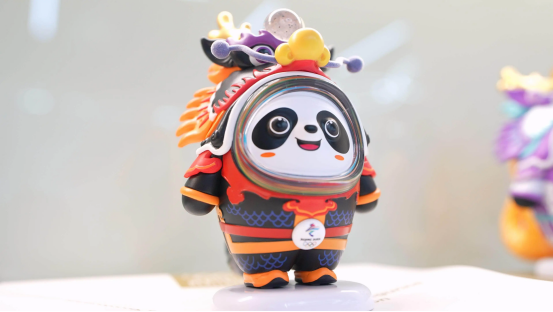
 7
6
4
4
4
3
3
3
3
3
7
6
4
4
4
3
3
3
3
3